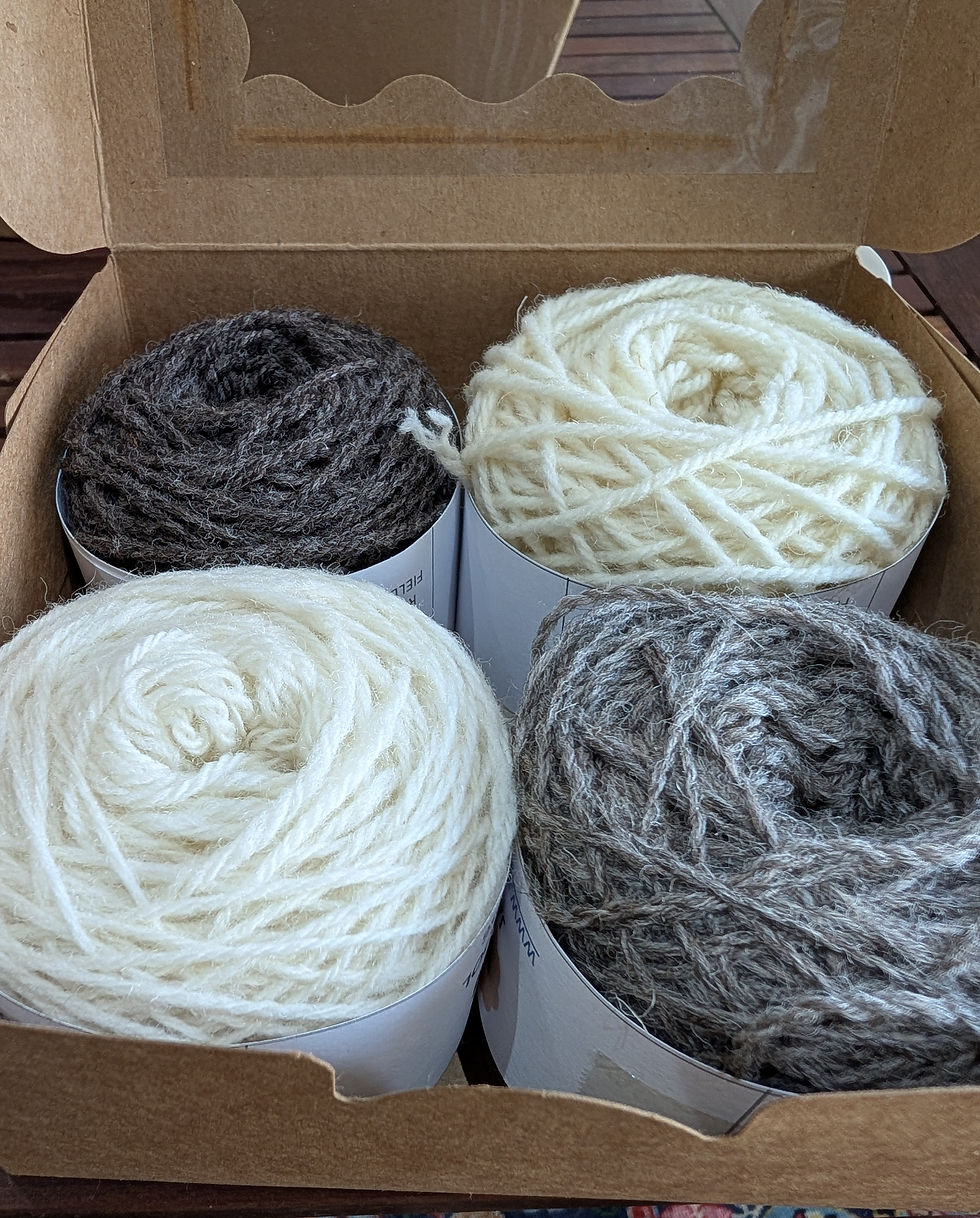
Sheep to Skein: Why Small-Batch British Wool Takes Time
When you pick up a skein of wool, it’s easy to admire its colour, feel its texture and imagine what you might make. What’s less obvious is the work that happened before that yarn reached the shelf.
At Woolplay, that journey matters. From our own Leicester Longwool flock to the other British breed yarns we stock, we love knowing where our wool comes from and sharing the story behind it.
But turning a fleece into knitting yarn isn’t a quick process. It involves several skilled stages, careful preparation and, often, a little patience. So why can it take months for wool to return from the mill?
It starts with a year of growing
Shearing is a once-a-year event: one opportunity to gather the fleece that will become a future batch of yarn. Shearing is also an important part of caring for sheep, with fleece removal at least annually helping to prevent heat stress and fly strike.
That annual rhythm makes wool rather different from something we can simply reorder whenever supplies run low. Before the processing even begins, the sheep have spent the year growing the raw material.
Shearing day is therefore a beginning, rather than the moment our new yarn is nearly ready.

Small quantities, individual stories
Small-batch processing allows fleece from a particular flock or breed to become its own yarn, rather than disappearing into a much larger blend. Mills offering individual batch processing keep a customer’s fleeces separate, preserving the connection between the finished yarn and its source.
At Woolplay, the mills we use include Diamond Fibres, Shire Mill, Rampisham Hill Mill and The Natural Fibre Company. Each offers something valuable to small-scale wool producers:
Diamond Fibres specialises in traditionally processing longwools, including Leicester, Wensleydale, Lincoln, Cotswold and Romney.
Shire Mill is a family-run woollen mill specialising in small-flock fibre processing, working with quantities as small as 1kg to produce rovings, batts or yarn.
Rampisham Hill Mill offers small- and medium-scale semi-worsted processing, with services from washing through to finished yarn.
The Natural Fibre Company processes wool in individual batches and being a larger operation is able to handle larger quanities of fleeces which is really handy when we have more fleeces than the other mills can handle
“Small batch” can mean quite different things from one mill to another. Choosing the right mill involves matching the fleece, the quantity available and the yarn we hope to produce.
What happens between fleece and finished yarn?
The exact route depends on the fibre, the mill and the type of yarn being made. Not every fleece goes through identical machinery, but the main stages follow a similar journey.
Sorting and preparing the fleece
First, the fleece needs sorting. Dirty or unsuitable sections, obvious vegetable matter and short “second cuts” from shearing are removed, while suitable wool is grouped for processing. Careful preparation helps establish the quality of the batch before it reaches the machinery.
This is also when decisions about the finished yarn begin to matter. The mill needs to know the breed, the quantity of fleece and the kind of yarn required so it can plan the appropriate processing route.
Scouring and drying
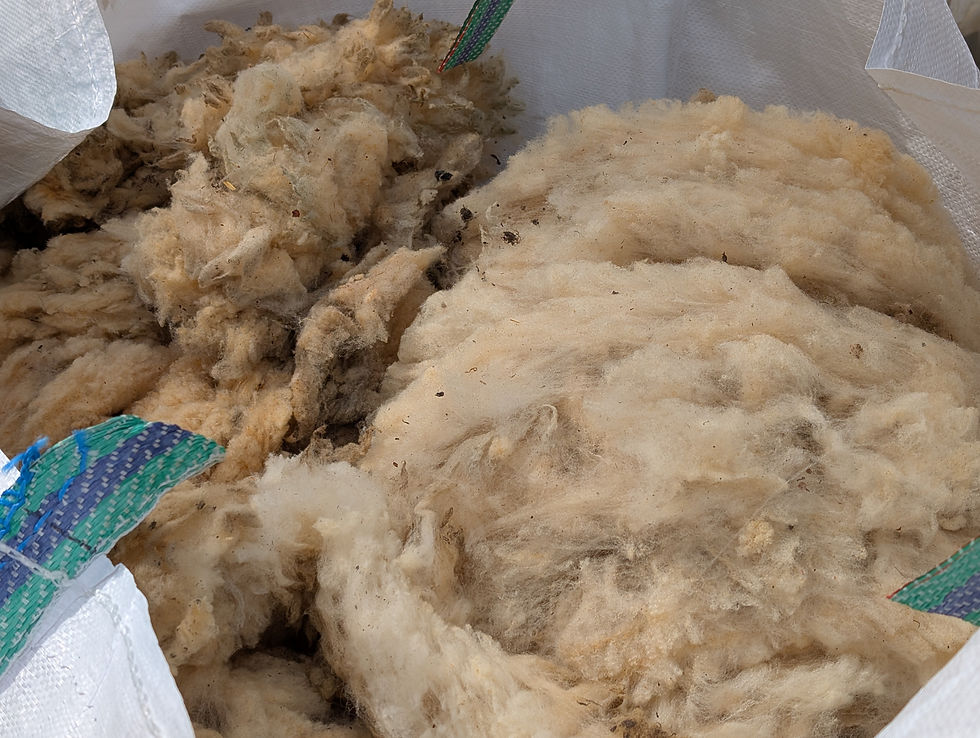
Freshly shorn wool contains grease, dirt and other material that we don’t want in a knitting yarn. Scouring is the washing stage that cleans the fleece, followed by drying before further processing.
There is a noticeable reduction in weight along the way. As an illustration, a 25kg batch of greasy fleece for woollen spinning will generally yield around 12–15kg after scouring. That is a useful reminder that a bag of raw fleece does not become an equivalent weight of finished yarn.

Opening and carding
The clean fleece is opened using a picker to loosen the fibres before carding. The opening also helps remove some of the finer vegetable matter, although it cannot remove every last piece.
Carding separates and organises the fibres into a form suitable for the next stage. Depending on the service, the wool may become batts for crafting or a continuous strand called sliver for further preparation and spinning.

Preparing the fibres for spinning
Some yarns require further stages, including gilling and combing. Gilling helps align the fibres and even out the strand; combing, where used, removes shorter fibres as part of preparing a worsted yarn.
This preparation can be far more involved than it sounds. Diamond Fibres describes spinning preparation as involving up to twenty distinct operations before the fibre is ready to become a single strand of yarn.

Spinning and plying
Spinning draws out the prepared fibre and adds twist to create a continuous strand of yarn. Depending on the intended result, two or more strands may then be twisted together in a separate stage called plying.
The yarn’s thickness and construction are part of the specification agreed with the mill. All the mills Woolplay uses offer a range of yarn weights and can return yarn as hanks, twisted skeins or cones.

Finishing and winding
Even after spinning, the work is not quite complete. Finishing and winding prepare the yarn for its next use, whether that means returning it on cones or making it into hanks or skeins. These are separate parts of the mill’s service, rather than something that happens automatically as the yarn leaves the spinning machine.
Only after that journey do we have the yarn we’ve been looking forward to seeing.

Why the whole process takes months
The short answer is that the time involved includes both waiting for a place in the mill’s schedule and the processing itself.
Small-batch mills work through booked orders, and fleece does not necessarily go straight onto the machinery when it is ready to leave the farm. All the mills we work with effectively have a waiting list to help them manage the processing as efficiently as possible. The wait for a production slot is separate from the time needed to wash, prepare, spin and finish the wool.
A fleece cannot go directly from the wash to a finished skein. Each preparation stage makes the next one possible, and some involve repeated passes through machinery to create a consistent strand. Processing estimates vary from at least 12 weeks to between 6 to 12 months! This is due to a combination of scheduling, preparation and the many stages needed to turn a natural fleece into something ready to knit. And those are only estimates which each job having its own journey.
The traceability we value depends on careful handling. Individual batches need to retain their identity, and machinery also needs appropriate cleaning between different runs.
Small-batch production is not simply a smaller version of a continuous run of identical yarn: the mill is handling different fibres and specifications.
Why this matters to us at Woolplay
Working with small batches helps us keep the connection between sheep, fleece and finished yarn at the heart of what we do. It means our own Leicester Longwool wool can have a story that begins with the flock, rather than at the shop shelf.
It also means planning ahead and accepting that a new batch cannot always arrive quickly. We work within the rhythm of an annual fleece harvest and the schedules of the skilled mills that process it.
As you can imagine we are always excited when the finished yarn comes back ready to indroduce it to you. By then, it represents much more than shearing day: it holds a year of growth, a series of careful decisions and many hours of skilled work.
That is part of what makes provenance so special. When you choose a skein with a known story, you’re not just choosing wool for your next project. You’re making that story part of whatever you create.