Is making a radical act?
In a world that often measures success by how much we can buy, choosing to make something with our hands has quietly become a radical act. The rhythm of knitting needles or the gentle twist of spinning fibre into yarn isn’t just a hobby—it’s a quiet protest against fast fashion, disposability, and the endless pressure to consume. At Woolplay, we're ok with that as we believe that making is more than crafting; it’s an antidote to a consuming culture that’s forgotten what value really feels like.
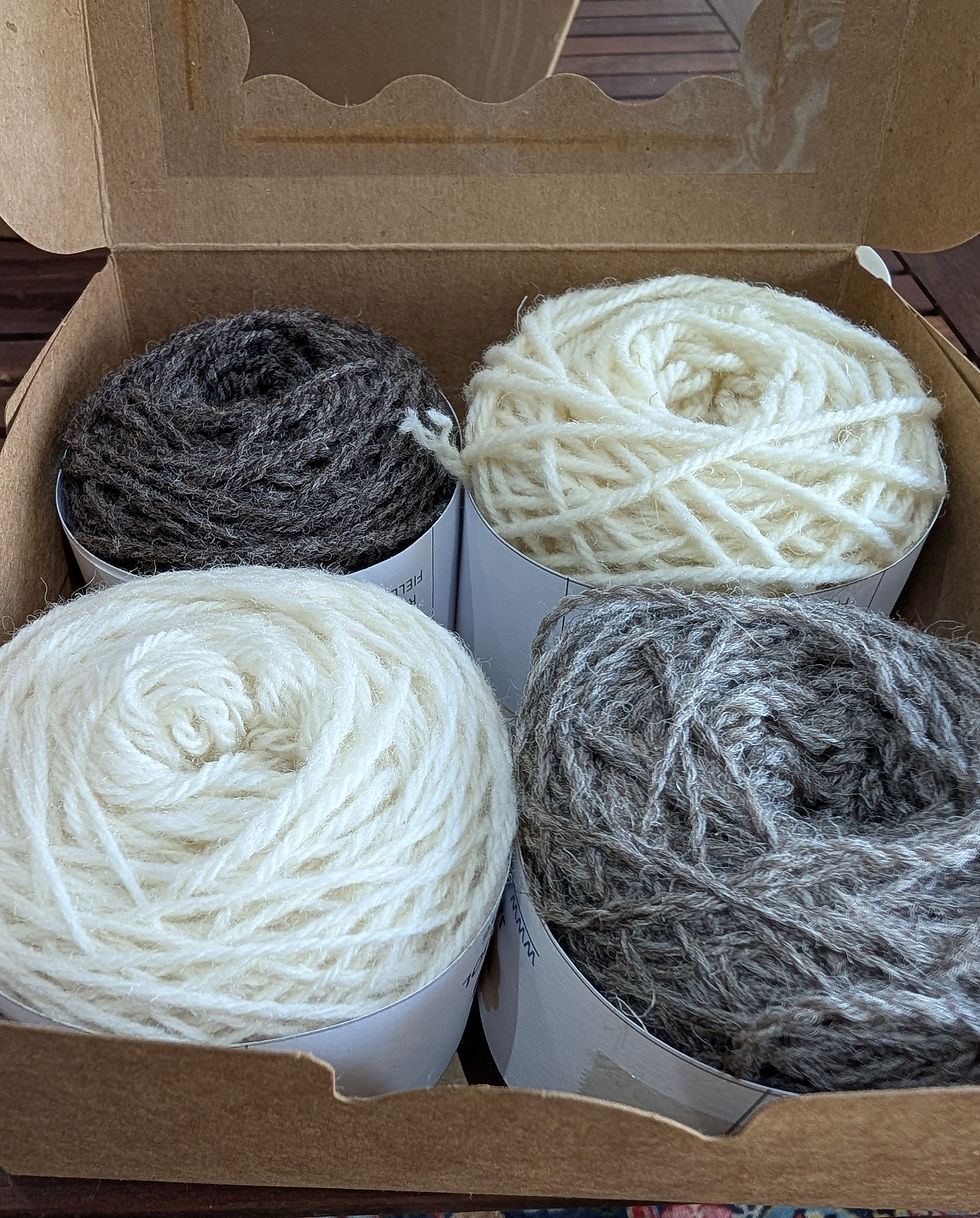
When you pick up a skein of British wool—whether it’s from our own Leicester Longwool flock or one of the other breed-specific yarns we stock—you’re holding more than a material. You’re holding a story that began in the fields, on the backs of sheep that have grazed British pastures for generations. Every twist and fibre carries a trace of provenance and care. Choosing to turn that yarn into a scarf or jumper asks something of you: time, patience, and presence. It’s a deeply human exchange, a kind of partnership between maker, material, and landscape.
The slow satisfaction of making
There’s something wholly different about wearing a jumper you’ve knitted yourself compared to one bought off the rack. It’s not just about quality—it’s about the love embedded in every stitch, the small imperfections that mark it as unquestionably yours. That satisfaction defies the instant gratification consumer culture craves. It asks us to slow down, to appreciate the process, to reconnect with our own hands.
Making changes the way we think about things. When you’ve spent hours knitting, you understand the true value of a garment. You see design differently: you start to look at structure, at fibre, at the choices behind every piece you wear. That awareness makes it impossible to accept the throwaway nature of fast fashion. Instead, we build wardrobes and homes filled with meaning, not just stuff.
Local wool, global meaning
At Woolplay, we’ve always been champions of British wool because it embodies everything counter to mindless consumption. Our Leicester Longwool yarn, for example, comes from sheep we tend ourselves—rare, historic animals whose lustrous locks have been part of Britain’s textile story for 250 years. By working with small mills and sourcing fleeces from neighbouring flocks, we keep production small-scale, traceable, and grounded in our landscape.
That matters to us. It means your wool has travelled only within the UK, not halfway around the world. It means small mills continue to thrive. And it means the value you invest isn’t just in the yarn, but in the community of people and animals who are part of our British fibre heritage.
Making as mindfulness
There’s also a deeply personal, almost meditative dimension to making. In the quiet act of looping wool onto needles or weaving a new warp, we create a space free from the noise of modern life. The process itself becomes a kind of mindfulness practice—each row or thread a small grounding moment. Instead of seeking distraction, we find focus. Instead of consuming to fill time, we make to understand it.
This isn’t to say that making replaces buying altogether; rather, it helps us buy better. Once you’ve invested labour and love into handmade pieces, you naturally begin to seek quality and integrity elsewhere—whether that’s in the materials you source or the businesses you support. You become a conscious consumer, one who values story, sustainability, and skill.
The quiet revolution of craft
Perhaps this is where the true challenge lies. Making isn’t an escape from the world of consuming—it’s a redefinition of it. Every handmade project is a quiet revolution, a way of saying: I choose meaning over immediacy. Knitters, weavers, dyers, and spinners are all part of a slow movement that values connection—between people, land, and material—above convenience.
So the next time you pick up your needles or select a skein from Woolplay, remember that you’re doing something quietly extraordinary. You’re not just making for the sake of it—you’re challenging the very idea that value can be bought off a shelf. You’re affirming that the best things aren’t consumed; they’re created, cherished, and shared.